The ultimate ends
In this text, I’m contemplating the possibility of postulating values in the age of nihilism and thinking which ideals are still worth worshipping, while referring to the theories of Bertrand Russell, G.E. Moore and others.
In his novel Demons (1873), Fyodor Dostoevsky is contemplating the moral consequences of atheism. In the chaos of revolutionary Russia, a collapse of religious belief culminated for him in the rise of nihilism, cynicism and moral relativism – which in turn led to the rise of destructive social movements and political extremism. His recipe for the restoration of meaning and morality in society is the return to Orthodox Christianity that he viewed as the only foundation of spiritual life in Russia.
Dostoevsky was right: nihilism and cynicism are bad. They are for weaklings who are unable to endure the collapse of traditional values – religion, national pride, family, and other moral frameworks imposed by large communities – yet equally unable to choose or legislate values of their own unlike true Übermenschen.
But contrary to Dostoevsky, resorting to religion is for weaklings too.
I keep having conversations with people who confess that, at some point, they realized the vanity and futility of pursuing the faux values of modernity – money, status, power, and began searching for something greater to devote themselves to until they ultimately found the answer in God.
What? Every time I am struck by this leap of logic.
Centuries ago, in the pre-Enlightenment world, religion was a justified tool for explaining both the nature of the cosmos and humanity’s place within it (August Comte: religion is false but necessary), but to choose religion in the 21st century is to commit oneself to something fundamentally invisible and unknowable, to voluntary submit one’s reason to blind faith – not better than an act of self-inflicted lobotomy and self-blinding. If there’s a need for worshipping something, I’d rather worship cats.
There’s almost definitely no God, the world is essentially purposeless, and there’s most likely nothing awaiting us after death.
Only happiness matters, or eudaemonia with constraints
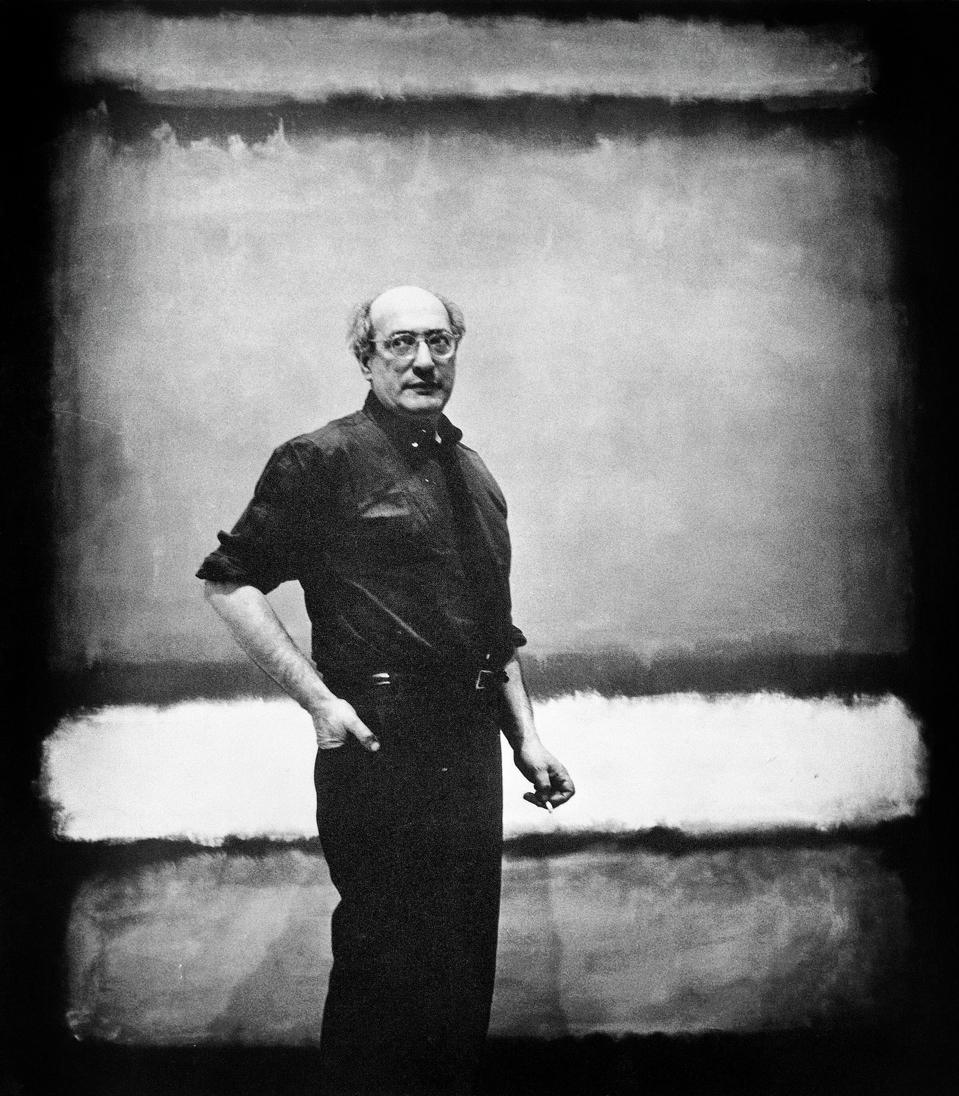
Only happiness matters. Not the legacy. When people discover your legacy, you’ll be dead. Like Kafka. Or Bach, or Lovecraft, or Emily Dickinson (in Hades, Achilles didn’t care about his immortal glory). Or you’ll be 60 years old, like Rothko. But in order to live happily, right here and right now, the thought of leaving a legacy brings peace and a sense of fulfillment. It’s not serving others that matters, but the sense of meaning and purpose that brings satisfaction and therefore happiness. If Mahatma Gandhi hadn’t enjoyed what he was doing, he would have quit fast.
In a well-balanced soul, it’s all aligned.
But happiness is a confusing word. The Greeks were more accurate in calling it eudaimonia, which is sometimes translated as flourishing.
Man is happy when he flourishes. What is flourishing? It is becoming everything a man can become.
No wonder the Greeks had only a vague semantic demarcation between words such as virtue, excellence, flourishing, and eudaimonia (happiness). See the Nicomachean confusion: What is virtue? What makes one happy. What is happiness? Living in accordance with virtue, and so on. Man is happy when he becomes what he can become. And since human nature does not differ greatly across most individuals, this means becoming excellent in universal human virtues: being courageous and just, wise and moderate, great-souled, and so on. It also means becoming what a particular individual can become. The latter part differs across individuals.
Following Nietzsche’s spots in East Germany
During the times of restricted travel you have no choice but to take a more thorough look at the map of places around: is there perhaps anything interesting that was unfairly overlooked in the past? East Germany doesn’t sound like a particularly exciting place to visit. Saxony-Anhalt and Thuringia don’t promise to contain many riveting spots. Unless your world is big enough to include some controversial philosophers from the 19th century. This summer, I read a 500-page book about Friedrich Nietzsche written by Walter Kaufmann, which was surprisingly relatable in many ways. Even though I never researched the theories of Nietzsche before, many ideas weren’t new at all – I guess this is what happens when you rely on the same original sources (Aristotle, for instance). So what could be better than researching something and then visiting the places described in the book in person – like on a school trip! Seems like an appropriate type of entertainment during the times of pandemic.
So, in the end of September I took a road-trip through several places in East Germany that were significant in the biography of Nietzsche: his home village of Röcken, the town of Naumburg where he lived, Jena – where he went insane, and finally Weimar – the place where Nietzsche died. Let’s go through these locations, and contemplate some of Nietzsche’s ideas relevant to each spot.
Fun, chatter and Heidegger
So I’ve been thinking of falsification of speech recently. The chatter. Gerede, to express it in Heideggerian terms. There’s no way out of Heideggerian interpretation of life once you step in, as it’s just way too relatable (applied Heideggerianism as a way of living!).
Does it merely come with age that at one point you no longer get amused by fun, but superfluous conversations dominated by random entertaining facts and supposedly fun stories? When the path of a conversation is nothing else but a random walk driven by unrelated facts: not thought-through, not linked to any abstract concepts, not fitted into one’s mental model. Under the facade of entertainment, such conversations are hollow, draining. They ‘take away one’s solitude without giving one company’. Because there’s no way how someone else can relate to a random entertaining fact, if it’s not generalized to the level of something a bit more generic, the level of abstract ideas, relevant to everyone regardless of circumstances of one’s particular life. And what’s the value of something that doesn’t even have an innate capacity to resonate. Does the intolerance for fun merely come with age?
Perugina and eliminative materialism
If you’re familiar with the ‘Baci’ candies – chocolate truffles manufactured by the Italian brand Perugina – you know that each truffle is wrapped into a tin foil together with a note that contains some cheesy quote about love or something similar. As Perugina website says, ‘these love notes are inseparable from the brand itself, that’s been passing on messages of love, affection and friendship since Baci Perugina was founded in 1922’.
Every note is full of words like love, heart, soul, etc. Just to give you an idea, here’re a few examples: ‘Friends are those with whom we do not fear to open our hearts’ Aelred of Rievaulx; ‘Love is a force that overcomes all obstacles’ Augustine of Hippo; ‘Let’s sin together, it’s good for the soul’ Vladimir Mayakovsky; ‘Love is what allows you to mend your wings and reach happiness’ Plato.
Quotes so cheesy that they instantly induce a gag reflex – what a brilliant thing to put on a chocolate packaging! But jokes aside, the phenomenon of Perugina illustrates how wide-spread and taken for granted the numerous concepts from the area of folk psychology – or, common-sense psychology – really are.
Terms like love, heart, or soul – I remember how I didn’t like the lessons of literature in school just because the teacher tended to interpret everything through the lens of these exact words, the concepts I could never entirely relate to. Growing older I learnt that a good antidote to any BS spreading via mainstream discourse is the fundamental philosophy. Or, sometimes not so fundamental. The area in the philosophy of mind called eliminative materialism emerged in the 70s – its main advocates, Paul and Patricia Churchland, claim that our perception of mental states is practically false, and many concepts produced by it would soon be discarded in light of the developing neuroscience. The very existence of these concepts has to be revised, and it’s very likely that many of them will be rendered outdated.