Death and dying
What is human history if not a never-ceasing wave of generations washing over old cities, buildings and streets – a wave that comes with its own life energy, its impulse of vitality (élan vital), pursuits and aspirations. Each generation comes with its paraphernalia – tiny things and objects of use, pictures in frames, tablecloths and curtains, geraniums on windowsills, fridge magnets from Sacré-Cœur, whistling kettles.
With time, the spark of energy fades. The wave retreats. Moving trucks arrive, the little things are taken away. Decorative pillows with Egyptian camels, ceramic mugs, oil paintings in golden frames. Removed. Floral bedspreads, puppet figurines, wallpaper from old photographs. Out. Apartments get renovated by crews of indifferent men. The last memories of things fade. Tarkovsky’s Mirror, a home where it always rains… À la recherche du temps perdu. The past is not to be found. It all goes into the dark. Only buildings remain, waiting for a tidal wave of new inhabitants.
The bodies are placed in black bags and taken away from their tiny shoebox homes.
***
I thought I knew everything about death.
I knew the concepts of temporality and mortality. I had read a thousand stories about the afterlife, the favourite theme of myths and religious tales. I knew of Chronos and Thanatos, of the Sumerian afterlife and the Elysian Fields, of Valhalla and the topography of Dante’s Inferno. I knew of the Greek goddesses of destiny, the Moirai, cutting the threads of fate. I had seen the Zoroastrian Towers of Silence and the cremation pyres of Varanasi. I knew everything about the final days of Socrates and about Heidegger’s description of death as the horizon of life. I knew that the fear of death was pointless because Socrates said we cannot fear what we do not know…
Except the death I knew about was an ontological concept, an abstract idea.
I had never faced the corporeal nature of it.
Only happiness matters, or eudaemonia with constraints
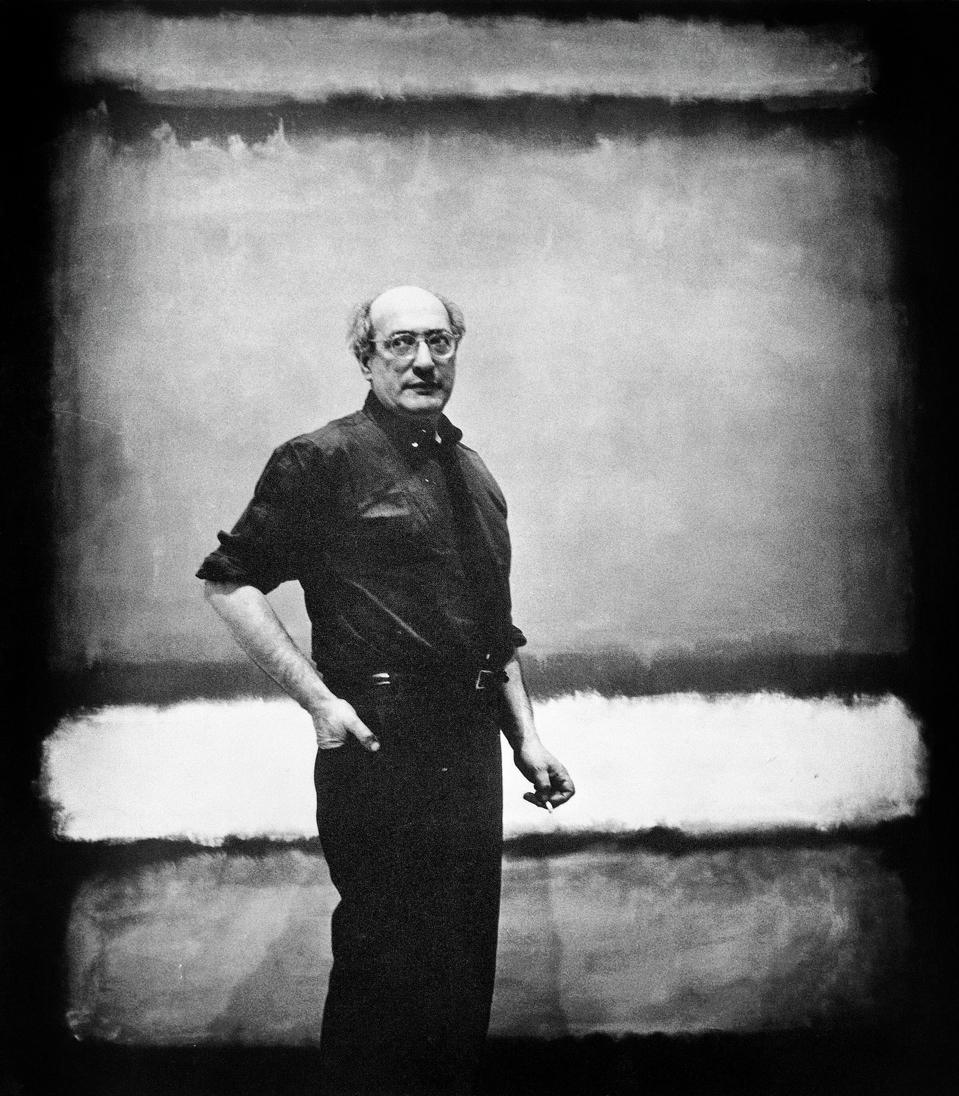
Only happiness matters. Not the legacy. When people discover your legacy, you’ll be dead. Like Kafka. Or Bach, or Lovecraft, or Emily Dickinson (in Hades, Achilles didn’t care about his immortal glory). Or you’ll be 60 years old, like Rothko. But in order to live happily, right here and right now, the thought of leaving a legacy brings peace and a sense of fulfillment. It’s not serving others that matters, but the sense of meaning and purpose that brings satisfaction and therefore happiness. If Mahatma Gandhi hadn’t enjoyed what he was doing, he would have quit fast.
In a well-balanced soul, it’s all aligned.
But happiness is a confusing word. The Greeks were more accurate in calling it eudaimonia, which is sometimes translated as flourishing.
Man is happy when he flourishes. What is flourishing? It is becoming everything a man can become.
No wonder the Greeks had only a vague semantic demarcation between words such as virtue, excellence, flourishing, and eudaimonia (happiness). See the Nicomachean confusion: What is virtue? What makes one happy. What is happiness? Living in accordance with virtue, and so on. Man is happy when he becomes what he can become. And since human nature does not differ greatly across most individuals, this means becoming excellent in universal human virtues: being courageous and just, wise and moderate, great-souled, and so on. It also means becoming what a particular individual can become. The latter part differs across individuals.
Those who can’t handle my lows don’t deserve my highs

The whole life is a sinusoid between hypomania and subsyndromal depression. Periods of intense enthusiasm alternate with periods of intense despair. Ecclesiastes 3: ‘There is a time to weep and a time to laugh, a time to mourn and a time to dance, a time to embrace and a time to refrain from embracing’. This captures the sinusoid rhythm of human living really well. Unlike, say, Aristotle who argued we should aim for the golden mean between two extremes.
There’s no such thing as a stable mood. It’s either really bad, like life-shatteringly bad, or really great. And I don’t even have BPD. I’m normal. This is normal. *
I’m kind of a depressive person. I’m prone to depressions. But I’m also effective and prone to prolonged states of productivity and excitement. When things are going well, those productive states prevail, and the depressive phases occupy only a small fraction of time.
The limits of compassion
In antiquity love was mostly understood as love for something good (someone who’s beautiful, courageous, wise, etc). In modernity (in post-Christian world), love is more often understood as something more similar to pity and compassion. The more miserable someone is and the more they suffer, the more love they deserve.
Alasdair McIntyre, in his book After Virtue, notes that there’s never been agreement on a definitive list of moral virtues. Every tradition and every school of thought had its own set of values that were considered most important. For instance, Aristotle listed courage, moderation, proper ambition, and reason, among others.
There’s a big church in the center of Prague called Our Lady of the Snow or Marie Snezné cathedral. Behind its massive wooden altar, there is a Latin inscription carved into dark wood that lists what Christians understand as primary virtues.
Humilitas. Patientia. Obedientia. Charitas. Paupertas. Castitas.
Humility, patience, obedience, charity, poverty, chastity. When I first saw it, I was struck by how different this list is from the list of classical Greek virtues.
2021 in books & other things
I’ve spent most part of this year lying on a sofa and reading books. No jokes – I even got a few wrinkles on my neck from lying in the same pose every day. Alright, I also took daily strolls through the same route along the park, river bank and a water treatment plant – a lifestyle more suitable for someone who’s 78 years old, not 28, huh?
In 2021, I’ve read around 24 books (21 logged on Goodreads, and a few more books about art which are always too hectic to quantify). Not too many, but I would say 2 books per month is a reasonable pace, when you mostly read hard-to-digest non-fiction. Fiction books are clearly overrated (unless it’s science fiction, which is always great). Reading fiction is not substantially better than watching Netflix series – at least in terms of the amount of knowledge retained afterwards (the value of daily consumption of made-up stories seems dubious to me). When someone brags about reading 100 books per year, be sure that it’s mostly fiction, so any marathons are pointless here.
In my experience, the most reasonable pace is reading around 20 pages per day. Doesn’t sound too impressive (unless it’s a textbook on Kant!), but that’s already almost 300 pages in two weeks – the length of an average book. And the most crucial thing in reading is to always write notes – footnotes on the page margins, main points summarized in iPhone Notes, or even full-featured reviews of Goodreads. Human brain can only transfer information from short-term operational memory into a long-term one, when the information is repeated a few times, so revising the book content by compiling a review is the best way to retain knowledge.